
Defining the Manager and Leader:
“success as a manager or administrator in modern organisations also involves leading. How to integrate the two processes has emerged as a complex and important issue…” Yukl (2010:26)
“It is one thing for a leader to propound a grand vision, but this is redundant unless the vision is managed so it becomes real achievement.”Dearlove (2001:538)
Leadership need to be developed in the future :
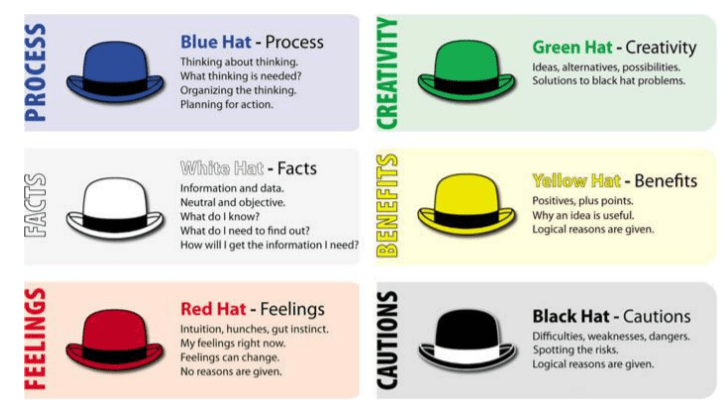
According to Paul Hersey and Ken Blanchard(1969),Situational Leadership should be used more of today’s management to deal with the various kinds of issues that existed during the business and everyday life of the organization (Hersey and Blanchard 1969).
- Leaders should constantly adjust their management styles to match environmental needs
- The leader needs only a clear evaluation of the situation and chooses the correct hat to direct his followers
- Under the same leadership different followers find a common target
Situation leadership has been famous in China, for example, Alibaba is one of the largest e-commerce firms in the world that uses situation leadership in different divisions to empower and encourage workers.
House identifies four main types of leadership behavior(Coventry University London – Moodle: Log in to the site, 2020):
Directive leadership – letting subordinates know exactly what is expected of them and giving specific directions. Subordinates are expected to follow rules and regulations. This type of behavior is similar to ‘initiating structure’ in the Ohio State Leadership Studies.
Supportive leadership – having a friendly and approachable manner and displaying concern for the needs and welfare of subordinates. This type of behavior is similar to ‘consideration’ in the Ohio State Leadership Studies.
Participative leadership – consulting with subordinates and the evaluation of their opinions and suggestions before the manager makes the decision.
Achievement-oriented leadership – setting challenging goals for subordinates, seeking improvement in their performance and showing confidence in subordinates’ ability to perform well. (Coventry University London – Moodle: Log in to the site, 2020)
How the Coronavirus Crisis will affect the leadership styles?
A crisis is described as a time that it takes to make tough or significant choices. The leaders also don’t see a crisis approaching and aren’t ready. The coronavirus crisis is happening now, but the last challenge we face is certainly not going to be this.
10 Ways leaders can rise to the challenge (10 Steps to Effective Coronavirus Crisis Leadership, 2020):
1.Align expectations In a crisis, you will not have all the answers but rationally.
2. All eyes are on you Leaders often forget that all eyes are on them. This is especially true as the intensity of a situation grows.
3. Stay positive “The pessimist complains about the wind. The optimist expects it to change. The leader adjusts the sails.” — John Maxwell
4. Tell the truth Communication is your kryptonite. Crisis often includes misinformation that leads to confusion.
5. Know what you stand for When someone asks what you as a leader stand for–what do you say? What is your purpose, mission and values? Every action should reflect this motivates and inspires teams for action. You, as a leader, are a brand. Don’t miss an opportunity to lead and build your brand equity in a crisis.
6. Demonstrate empathy Listen to understand. Show people that you genuinely care by relating to their perspective.
7. See the big pictureLeaders can see the big picture and visualize the potential impact long before others do.
8. Slow down and stay calmKeep calm and carry on! People need to feel safe and secure.
9. Have a plan“The very essence of leadership is that you have to have vision. You can’t blow an uncertain trumpet.” –Theodore M. Hesburgh
10. Simply lead Leaders simply lead. They work from within themselves, with the courage, emotional intelligence and integrity to navigate the crisis around them.
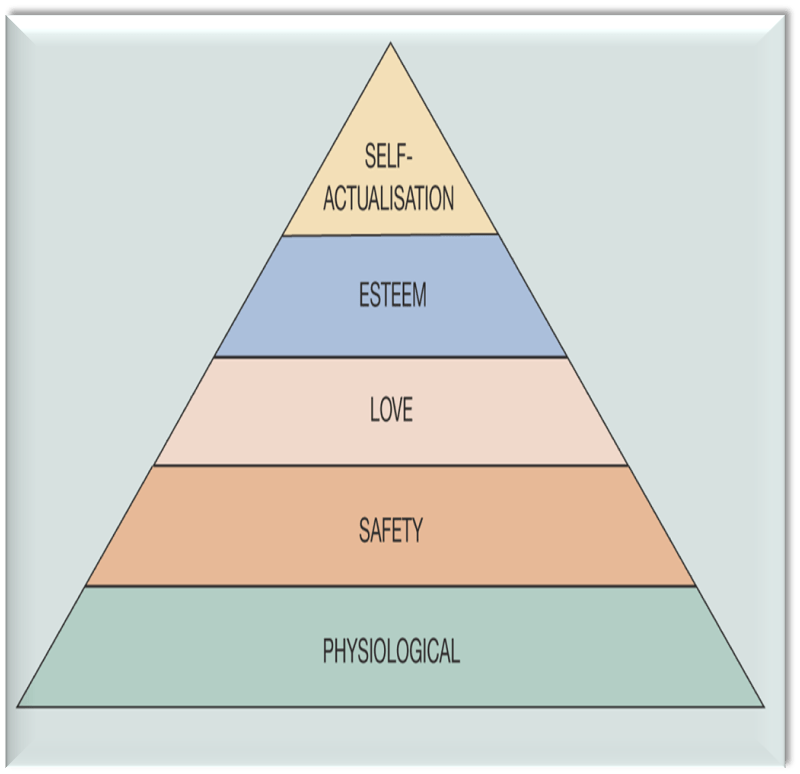
People do not always fulfill their needs, particularly higher-level needs, only by work There is uncertainty about the time that elapses between satisfying lower-level needs and the appearance of higher-level needs Many incentives or results that fulfill more than one need,But workers are only looking for physiological and health in this situation.
5 Things Leaders Must Know If Everyone Gets Sent Home To Work By COVID-19:
There’s plenty of doubt, tension and terror about the latest Coronavirus epidemic. Yet, the confusion is not just about how the pandemic will affect our health yet economies. The truth is, there have been many leaders posing new challenges — like how to guide people through difficult times, and how to keep them committed, such as(Nordstrom, 2020):
- We’re humans before we’re employees: Pandemic is terrifying. So while the initial reaction to sending the staff home to work could be, “I’m going to track my team and make sure they’re working while I want them to work,” it’s time to step back and remember that we’re all in a peculiar position.
- Distractions are not defining moments: It is important to realize as a leader that not all workers are going to respond equally to working from home. Some would have more distractions than most.
- eadlines still exist. Or, do they? And, for what?: We all work in rising industries. At the moment some sectors are struggling while some are booming.
- Business hours are only for meetings: During normal operating hours any of the staff become overwhelmed. Lets confuse them. Let them establish their own timetable for their job.
- Your team will surprise you, if this one condition: You want to get the employees to work. They like to feel vulnerable. They want profitability. But they do want to feel valued for their efforts, and respected for the other aspects of their lives that are feeling pretty frightening right now — their children at home, their own health and safety, and the elderly members of their families who pose the greatest danger.
Hersey, P., Blanchard, K. H., & Johnson, D. E. (1969). Management of organizational behavior (p. 65). Englewood Cliffs, NJ: Prentice-Hall.
Hersey, P., Blanchard, K. and Johnson, D., 2017. Management Of Organizational Behavior. New Delhi: Pearson India Education Services.
Inc.com. 2020. 10 Steps To Effective Coronavirus Crisis Leadership. [online] Available at: <https://www.inc.com/entrepreneurs-organization/10-steps-to-effective-coronavirus-crisis-leadership.html> [Accessed 23 March 2020].
Culcmoodle.coventry.ac.uk. 2020. Coventry University London – Moodle: Log In To The Site. [online] Available at: <https://culcmoodle.coventry.ac.uk/pluginfile.php/515842/mod_resource/content/1/trade_profiles18_e.pdf> [Accessed 4 April 2020].
Culcmoodle.coventry.ac.uk. 2020. Coventry University London – Moodle: Log In To The Site. [online] Available at: <https://culcmoodle.coventry.ac.uk/pluginfile.php/515842/mod_resource/content/1/trade_profiles18_e.pdf> [Accessed 4 April 2020].
Nordstrom, T., 2020. 5 Things Leaders Must Know If Everyone Gets Sent Home To Work By COVID-19. [online] Forbes. Available at: <https://www.forbes.com/sites/toddnordstrom/2020/03/19/5-things-leaders-must-know-if-everyone-gets-sent-home-to-work-by-covid-19/#636eaf5041a4> [Accessed 8 April 2020].
 AmmarNofal
very interesting blog with the updated situation about the pandemic!!! However, from the four main types of Leadership behaviour that you mentioned, which one do you think it is the best or what kind of leadership do you want to be?
LikeLiked by 1 person
Amazing blog and lovely structure. Ammar, what’s the most essential character you think a leader should implement to maintain a well and recommendable leadership style?
LikeLiked by 1 person